LETTING GO
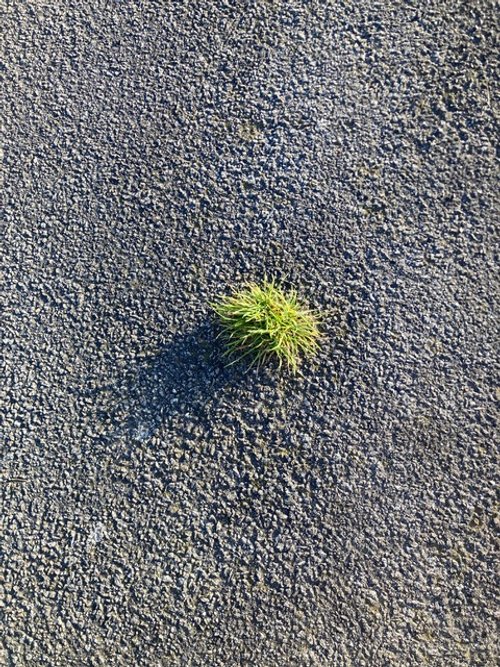
I’ve come downstairs to the conservatory which houses the long table that serves as my writing and painting studio. I came down with the intention of writing an essay about letting go, a phrase that I find both grammatically and psychologically fascinating.
I managed to distract myself from the writing by researching various dictionary definitions of said phrase, learning – among other things – that ‘letting’ is both present participle and progressive tense. Who knew? The OED definition is: ‘giving permission.’ Moving on to ‘go’ which the OED horrifyingly informs me has 603 senses, but can thankfully be reduced to simply meaning: to move, to proceed, to leave. It is also an imperative as in, “Go fuck yourself.” And irregular. About which, more later.
After about an hour of this I was both overwhelmed and nearly braindead and decided that letting go of the whole endeavour would be a good idea.
For the last two months, I have been revisiting some three hundred and fifty essays written over the last 14 years (all of which can be found here on my website.) Several days a week, I read anywhere from one to ten of them, starting in 2011, I’m currently half-way through 2015. I aim to publish a collection of the best at some point, which will mean letting go of at least three hundred of them.
One of the many interesting discoveries in re-reading these essays, is seeing how often I convinced myself that I had let go of the need for success. And how, each time, I was sure that rejection would no longer take me down. What childish, delusional, creatures are we humans, that we believe that letting go of anything can be done in one sitting? More often than not it is, like most things in life, and ongoing process wherein we momentarily loosen our grip on that which we wish to be rid of only to find that it still has a grip on us.

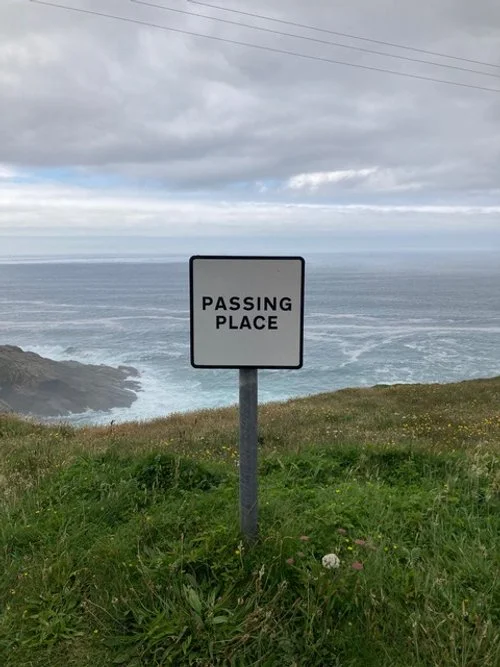
Last Saturday we returned from two weeks in Cornwall. For months we had looked forward to being in a flat in St. Ives, overlooking the sea and the old harbour. We talked about how wonderful it would be to breakfast on the balcony after an early morning swim, a mere three-minute walk down the lane. I envisioned daily walks on my beloved Clodgy: the rugged, clifftop path from St. Ives to Zennor. This is the place I’ve been going to for decades; the place where I first felt the sense of belonging; the place which, for all those decades, I had dreamed of spending my final years.
The flat proved unliveable: the balcony covered in layers of shit courtesy of a baby seagull and its parents having chosen it as its nest. The rest of the flat defies description. We spent one, unpacked, unwashed night there before the rental company kindly moved us the next morning to the only place left available, some ten miles away, no sea view, no transportation, no cliff walks, no early morning swims. During the following days Joel fell down some steps, I injured a finger, we had no phone service and a taxi to St. Ives cost £75 round-trip. There were, of course, good moments, mainly around art, watching Wimbledon on TV and the company of good friends the second week. Ah, the second week. Constipated the entire time. Five nights of laxatives to no avail, but unable to leave the house just in case. If the opposite of letting go is holding on, well, that was a good example.
It took me a couple of days of being home to finally – as the saying goes – let go of my shit and to realise that I’d been holding on to the need for that place where I’ve always felt I belong. I’ve rather prided myself on my ability for letting go: countries, marriages, material objects, journals, jobs. If any of them no longer worked for me out they went and off I’d go.
But some things take root in us on such a profound level that tearing ourselves away feels as though to do so will leave a gaping hole that can never be filled. What I now understand is that the thing that took root in me almost 79 years ago, was the need to belong. Letting go of those Cornish cliffs is painful, but necessary.
I’m reminded of the saying: “You have to let go of one door before another can open…and it’s hell in the hallway.”
I’m not in hell, but I am in the hallway, looking for the door that opens onto self-belonging, which is, after all, the only possible belonging. I’m going with the OED’s info on letting go, i.e., giving myself permission to leave and move on.
With love,
Maggie